What to Keep in Your Car for Winter Emergencies: A Winter Car Emergency Kit Checklist
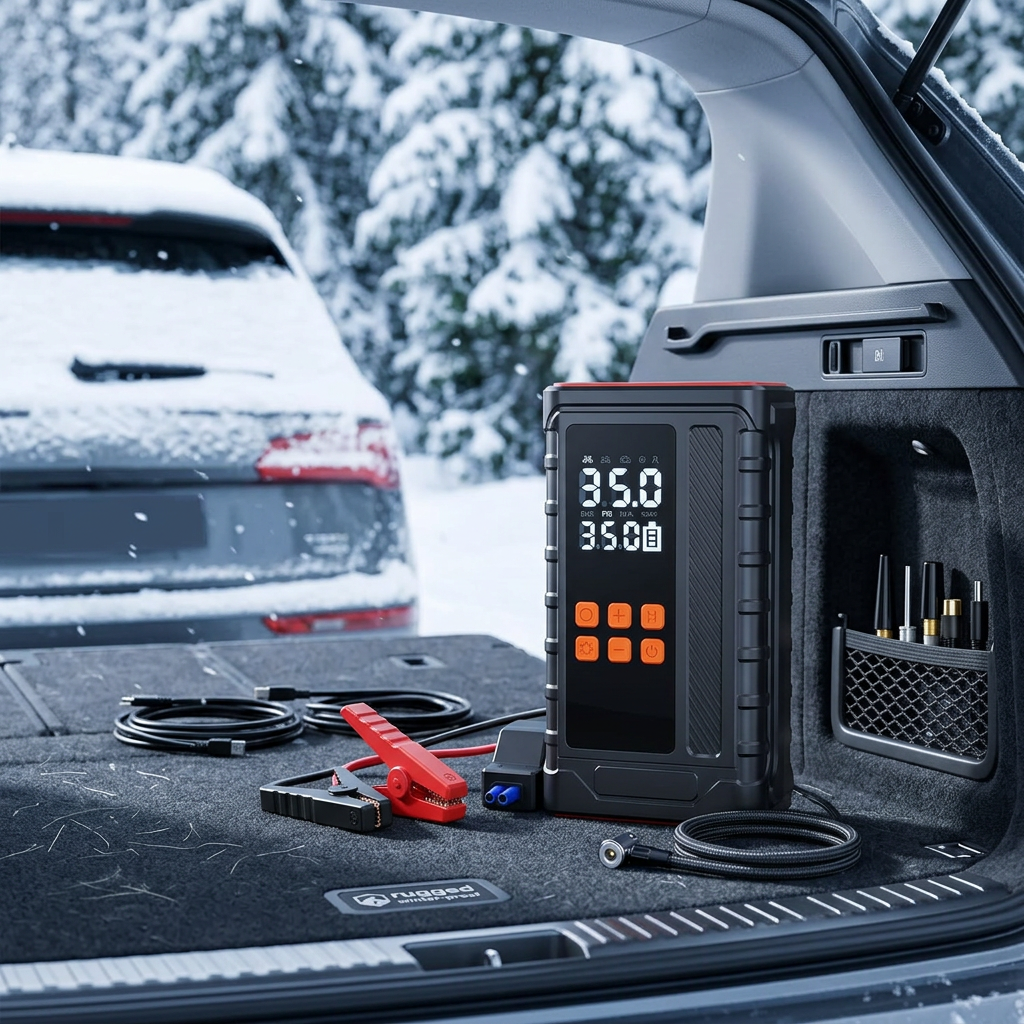
A dead battery in a warm garage is an annoyance. A dead battery on a dark road at 10°F, or a car stuck in a snowbank, is a different story. A few items in the back seat make the difference between a long wait and a dangerous one.
Below is what to keep in your car for winter emergencies: a simple winter car emergency kit checklist, what to do if you are stranded in snow, and how to jump-start a car without another car.

Our pick for a winter car kit
Portable Jump Starter with Air Compressor
Starts your car without another vehicle, inflates tires and charges your phone. 4-in-1 · Free US shipping
Why car batteries die in cold weather
Cold slows down the chemical reaction inside a battery, so it has less power just when a cold engine is harder to start. According to AAA:
- At 32°F, a car battery loses about 35% of its strength.
- At 0°F, it loses about 60% of its power.
AAA puts the average battery lifespan at three to five years, often closer to three. Its warning signs include a battery more than three years old, dim or yellowish headlights, a weak-sounding horn, and a case that is swollen, cracked or corroded. If any of these sound familiar, have the battery tested before the first cold snap.
Winter car emergency kit checklist
Emergency agencies recommend much the same core items. Here they are grouped by what they help you do.
To get moving again
- Jumper cables or a portable jump starter. Cables need a second car; a jump starter doesn't. A model with a built-in air compressor also handles a low tire, which covers two items on this list.
- Ice scraper and snow brush.
- Folding snow shovel.
- A bag of sand or non-clumping kitty litter to put under the tires for traction.
- Tow strap, and tire chains if you drive where they are needed.
To stay warm
- Blankets or a sleeping bag.
- Hats, mittens, warm socks and winter boots.
- Hand warmers.
To be seen and call for help
- Phone charger or power bank. Many jump starters double as one.
- Flashlight with extra batteries. A bendable, rechargeable light like our Flexible LED Work Light can wrap around the hood latch so both hands stay free.
- Road flares or reflective warning triangles.
- A brightly colored cloth and a whistle to signal rescuers.
The basics
- Bottled water and high-calorie snacks such as granola or protein bars.
- First-aid kit and any medications you need.
- Multi-tool.
- Windshield washer fluid or glass cleaner. Clear glass matters more on short, dark winter days. For the greasy film that wipers smear around, try our Car Glass Oil Film Remover.
Three tips that make the kit work
- Keep it where you can reach it from the driver's seat, such as a bag behind the passenger seat, so you don't have to get out in a storm to open the trunk.
- Keep your gas tank close to full whenever possible, as NHTSA recommends.
- Check the kit at the start of each winter. Recharge the jump starter and power bank, and replace snacks, water and anything you used.
What to do if you're stranded in your car in snow
NHTSA and state emergency agencies give the same core advice:
- Stay with your vehicle. Walking in a storm is dangerous, and a car is easier for rescuers to find than a person. Call 911 or roadside assistance if you can.
- Make yourself visible. Tie a bright cloth to the antenna or door handle, and set out flares or reflectors if it is safe to do so.
- Run the engine about 10 minutes each hour for heat, not continuously, to save fuel.
- Keep the exhaust pipe clear of snow, and open a window slightly while the engine runs. Snow blocking the exhaust can send deadly carbon monoxide into the car.
- Bundle up and keep moving. Wrap yourself in blankets and extra clothing, move your arms and legs to keep blood flowing, and try to stay awake.
- Don't eat snow. It lowers your body temperature; drink the water from your kit instead.
How to jump-start a car with a battery pack (without another car)
A portable jump starter lets you start a car without waiting for a second vehicle. The exact steps depend on the model, so always follow the manual that came with yours. The usual order is:
- Turn off the ignition, lights, heater and anything plugged in.
- Check that the jump starter is charged.
- Connect the red clamp to the positive (+) terminal of the battery.
- Connect the black clamp to the negative (−) terminal or to bare metal on the engine, as your car's manual recommends.
- Turn on the jump starter and start the car.
- Once the engine runs, remove the black clamp first, then the red, and let the car run or drive for a while so the battery can recharge.
Many newer jump starters have smart clamps that warn you if the clamps are connected the wrong way. Check whether yours does, but always double-check red to plus and black to minus yourself.
Frequently asked questions
Is a portable jump starter worth it?
If you drive in winter, often drive alone, or park where no one can give you a jump, yes. It saves the wait for roadside help and works in a parking lot or on a quiet road. Models with a built-in air compressor and USB port also cover low tires and a dead phone.
Do portable jump starters work in cold weather?
Yes, but cold affects every battery, including the one inside the jump starter. Keep it fully charged, top it up every few months, and check its manual for the temperature range it is designed to work and be stored in.
Where should I keep my winter car emergency kit?
In a bag or bin in the back seat or passenger area, so you can reach it from inside the car. Check it at the start of winter and restock anything you use.
What should be in a car emergency kit all year?
A jump starter or jumper cables, a flashlight, a first-aid kit, water, snacks, a phone charger and reflective triangles. In winter, add the warm clothing, blankets, scraper, shovel and traction aids above.
Ready to build your winter kit? Our Portable Car Jump Starter with Air Compressor starts your car, inflates tires and charges your phone, and ships free in the US. For more ideas, browse our Winter Home Essentials.
Sources: Winter Driving Tips, National Highway Traffic Safety Administration (NHTSA); Cold Weather Is Hard on Your Car Battery, AAA; Cold Weather Road Hazards, California Department of Public Health; Stranded with your Vehicle, State of Maine (National Safety Council tips).